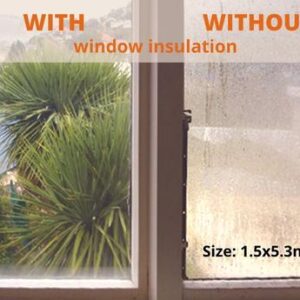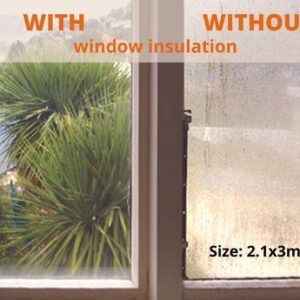
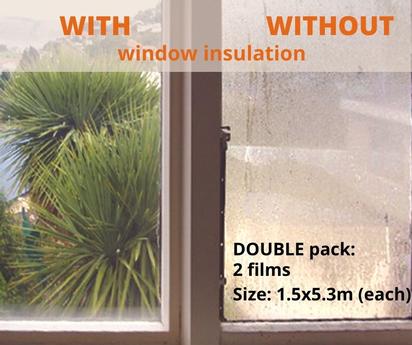
DIY window insulation acts like double glazing but is much more affordable than permanent glazing. It may be a good solution if permanent double glazing is not an option.
DIY window insulation consists of a thin, clear plastic film taped to the inside of your window frame but not on the glass itself. It prevents condensation and reduces heat loss by acting as double glazing. The film is easy to install and the only thing needed is a pair of scissors and a hair dryer to shrink it so it looks tidy.
DIY window insulation can be used on wooden and aluminium frames. It is not recommended for use on plaster, drywall/wallboard, unfinished/unvarnished wood or frames with a flaking paint surface. It is most effective when the window frame is 10-20 mm thick. When installed on wooden frames in the middle of winter, condensation from the wet wooden frames may form between the plastic and the glass pane. This will not affect the effectiveness but may be unsightly and we recommend it is installed before winter.
A thin layer of clear plastic film, double sided tape, alcohol wipes to prepare the frame surface plus illustrated instructions on how to install the window insulation. CEA recommends you buy extra tape.
The DIY window insulation kit is meant to last for one heating season but anecdotal evidence has shown it can remain intact for several years. It is best removed with adhesive remover to avoid any damage to the paint on the window frame or the frame itself.
As long as the insulation is up you will not be able to clean the inside of the pane so make sure that is cleaned before you put the insulation up and make sure the room is clean and dust-free when you are installing it. CEA has trialed cleaning the plastic with a soft cloth and window cleaner and there have not been any adverse effects after 4 weeks.
The DIY window insulation comes in a kit of app. 4.5m2 (1.50m x 3.00m) of window film, 18m double-sided tape and detailed instructions. You simply cut the film to the size of your windows.
DIY window insulation can be a good solution to avoid condensation and heat loss through windows. However, caution is advised in the following instances:
Many rental properties remain uninsulated despite subsidies. read more...
Curtains from earthquake damaged resthome are recycled through Curtain Bank. read more...
We now have a dedicated page on keeping warm after the earthquake. read more...